Saturday, January 05, 2013

My Dissertation Genealogy (AKA My Academic Family Tree)

After reading Jessica's post over at MagmaCumLaude of her academic lineage I have been chomping at the bit to work on my own (this has also been done by Ian at Hypo-thesis a little before Jessica who can trace his lineage back to Newton). Starting at the obvious place, with my advisor, I realized quickly I had a bit of digging to do. My advisor only knew the name of his advisor's advisor (my great-grand advisor) but nothing more. A quick literature search turned up nothing so I had to go on the hunt. Here are the results of my endeavors. As with Jessica I focused on the PhD advisor since many people either didn't have Master's advisors or they are difficult to impossible to find.

This is me, Jim Lehane (1981-?). I plan on receiving my PhD from the University of Utah in 2013.

Me
My graduate advisor is Dr. A. A. (Tony) Ekdale who teaches at the University of Utah.
Tony on the shore of the Gulf of California. Photo courtesy of Crystal Hammer.
Tony received his PhD from Rice University in 1974 with a dissertation entitled "Geologic History of the Abyssal Benthos: Evidence from Trace Fossils in Deep Sea Drilling Project Cores". His primary focus of research is ichnology and is well known for coining the phrase "ichnofabric".
Tony's PhD graduate advisor was Dr. John Warme who taught at Rice University and the Colorado School of Mines.  
John Warme's courtesy of The Colorado School of Mines.
John received his PhD from the University of California at Los Angeles (UCLA) in 1966. His primary areas of focus are stratigraphy, paleoecology, and ichnology. 
John's PhD graduate advisor was Dr. Clarence A. Hall who is a retired professor for UCLA.
Clarence Hall's courtesy of UCLA
Clarence received his PhD from Stanford in 1956 with a dissertation entitled "The Geology of the Pleasanton area, Alameda County, California".
 Clarence's PhD graduate advisor was Dr. Siemon (Si) Muller (1900-1970) who was a professor at Stanford University.
Si Muller courtesy of Silberling, 2007
Si received his PhD from Stanford in 1930. He is best known for coining the phrase "Permafrost". He was also one of the few people elected to the presidency of The Paleontological Society who never published a description of a fossil.
Si's PhD graduate advisor was Dr. James Perrin Smith (1864-1931) who was a professor at Stanford University.
James Perrin Smith courtesy of The National Academy of Sciences
James received with PhD from Goeettingen, Germany in 1892. He is best known for his study of Mesozoic ammonites.
James's PhD graduate advisor was Dr. Adolf Von Koenen (1837-1915) who was a professor in Goeettingen, Germany.

File:Voit 154 Adolf Koenen.jpg
Adolf Von Koenen courtesy of Wikipedia

Adolf received his PhD from Friedrich-Wilhelms-Universität, Berlin (later Humboldt University of Berlin) in 1865. His dissertation is entitled "De stratis helmstaedtiensibus oligocaenis inferioribu".
Adolf's PhD graduate advisor was Heinrich Ernst Beyrich (1815-1896) who was a professor at Friedrich-Wilhelms-Universität.
File:Heinrich Beyrich.jpg
Heinrich Ernst Beyrich courtesy of Wikipedia
Heinrich recieved his PhD in 1837 at the University of Berlin (UB),  with a dissertation entitled: De goniatitis in montibus rhenanis occurrentibus. He is known as one of the founders of the German Geological Society and proposed the term Oligocene.
Heinrich's PhD graduate advisor was most likely Christian Samuel Weiss (1780-1856) from the University of Berlin and Georg August Goldfuss  (1782-1848) from the University of Bonn.

Georg August Goldfuss courtesy of Wikipedia
Christian Samuel Weiss courtesy of Humboldt University
Christian received his PhD in 1801 from the                           Georg received his PhD in 1804 from the University of Leipzig.                                                            University of Erlangen. His advisor is unknown.


Christian's PhD advisor was Abraham Gottlob Werner (1750-1817).

Abraham received his PhD in 1774 from the University of Leipzig. Abraham is known for advancing the "Neptunian" view of the earth, which stated that all rocks had been deposited in a primordial ocean.
Abraham's PhD advisor was Johann Carl Gehler (1732-1796). Johann received his PhD in 1758 from the University of Leipzig.
Johann's PhD advisor was Christian Gottlieb Ludwig (1709-1773). Christian received his PhD in 1737 from the University of Leipzig.

 Christian's advisor was Augustin Friedrich Walther (1688-1746). Augustin received his PhD in 1712 from the University of Wittenberg. 
File:Aug Fried Walther.jpg
Augustin Friedrich Walther

Augustin's advisor was Johann Gottfried von Berger 1659-1736) who received his MD in 1682 from the
University of Jena.

Johann's advisor was Augustin Heinrich Fasch (1639-1690) who received his MD in 1663 from the University of Jena.

 Augustin's advisor was Werner Rolfinck (1599-1673) who received his MD in 1625 from the University of Jena. Werner had 2 advisors. 
Werner Rolfinck courtesy of www.med.uni-jena.de
                                              
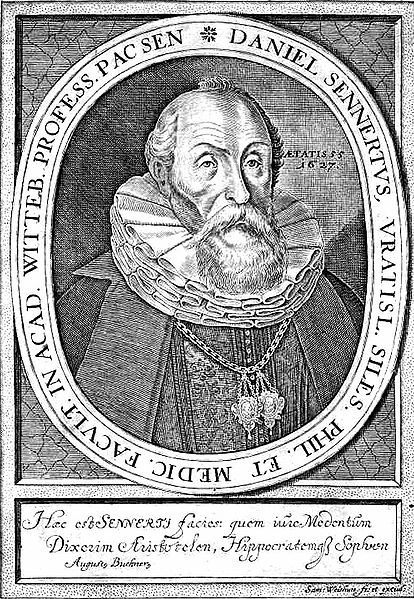
The first one was Daniel Sennert (1572-1637) who            The second one was Adriaan van den 
received his MD in 1599 from Leucorea University               Spieghel (1578-1625) who received his MD 
in Wittenberg.                                                                       in 1603 from the University of Padua.
   File:Adriaan van den Spieghel.jpg
Adriaan van den Spieghel
File:Daniel-Sennert.jpg                 
Daniel Sennert
                                             
Daniel's advisor was Jan Jessenius (1566-1621) who  
received his MD in 1591 from Leucorea University in Wittenberg. 
File:Jan Jesenius.jpg
Jan Jessenius
                     
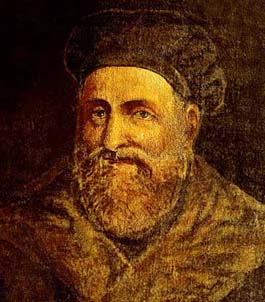
 Both Jan's and Adriaan's advisor was Girolamo (Hieronymus Fabricius) Fabrici d'Acquapendente (1537-1619) who received his MD in 1559 from the University of Padua. He is known as the Father of Embryology.
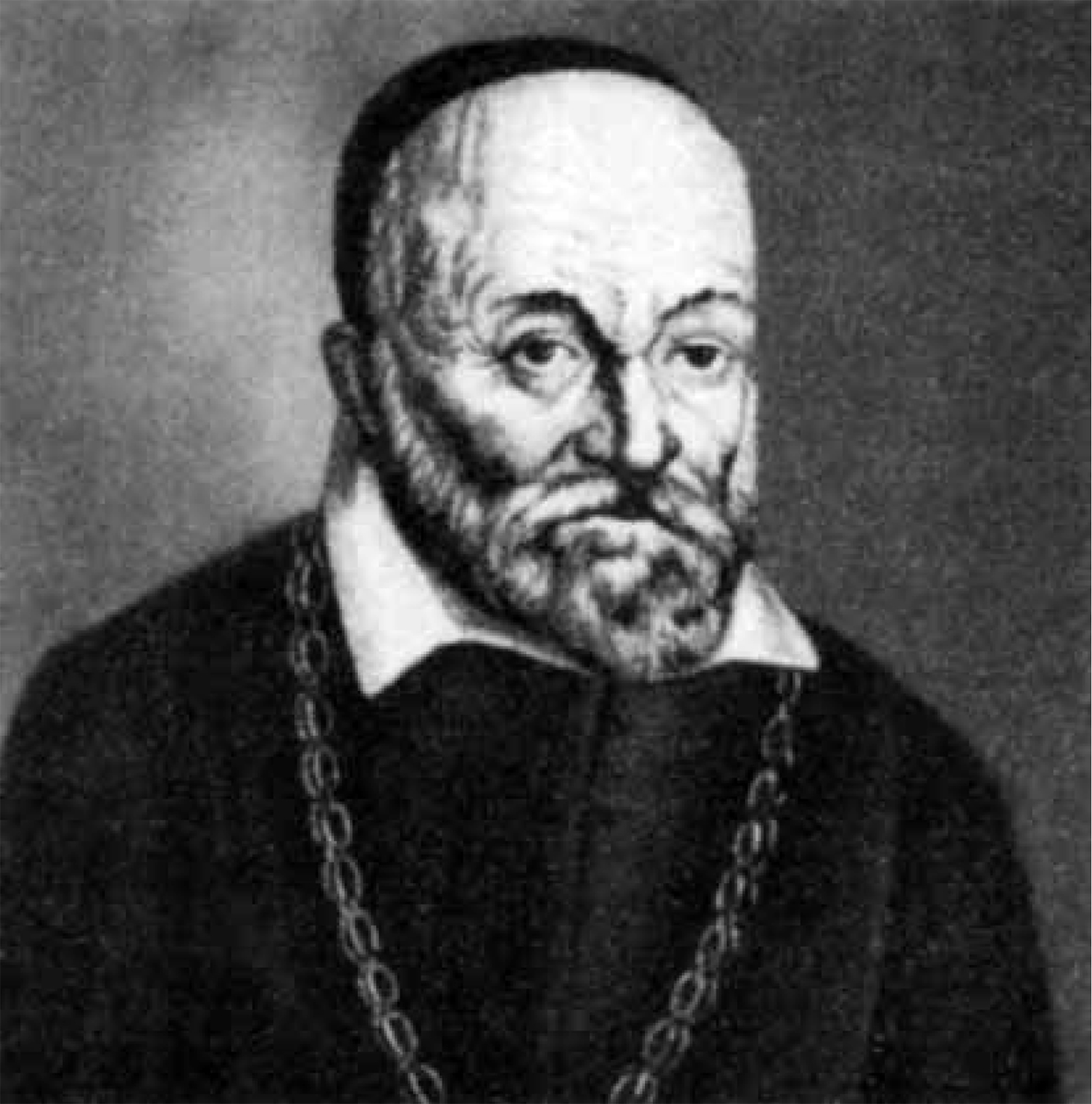
File:Girolamo Fabrizi d'Acquapendente.jpg
Hieronymus Fabricius courtesy of Wikipedia


Girolamo's advisor was Gabriele Falloppio (1523-1562) who received his MD in 1547 from the University of Padua. 
File:Gabriele Falloppio.jpg
Gabriele Falloppio
 
Gabriele's advisor was Antonio Musa Brasavola (1500-1555) who received his MD in 1520 from the University of Ferrara.
File:Antonio Musa Brasavola.jpg
Antonio Musa Brasavola
Antonio's advisor was Niccolo (Leoniceno) da Lonigo (1428-1524) who received his MD in 1453 from the University of Padua. 
Niccolo (Leoniceno) da Lonigo

 
 Niccolo's advisor was Pietro Roccabonella Veneziano (1427-1491) who received his MD in 1455 from the University of Padua.


 Pietro had two advisors. One was Gaetano da Thiene      The second was Sigismondo Polcastro.
(1387-1465) Gaetano received his his degree from the          (1397-1473) who recieved his degree from the
University of  Padua.                                                            University of Padua. His advisor is unknown.
                                                              
Gaetano's advisor was Paulus (Paul of Venice) Venetus (1368-1428) who received his degree from the University of Padua, although he likely studied with Pierre d'Ailly at the University of Paris.
Paulus' advisor was Pierre d'Ailly (1351-1420) who received his doctorate in theology in 1381 from the University of Paris.
File:Pierre d'Ailly.jpg
Pierre d"Ailly


Although the Academictree.org website says that the lineage goes on I believe it is tenuous from this point forward. And even further beyond those things get really iffy. Although if you keep following this line, eventually you get to Jesus.


---------------------------------------------------------------------------------

Footnotes
I was stuck on Clarence Hall for a while and even got a copy of his dissertation to find out his advisor who nobody really seemed sure of. Even the dissertation did not specifically call it out. But upon finding out he was still alive, I just emailed him and my suspicions were immediately proved correct (very fast email response) that it was Si who was his advisor. Further work was easy on the internet, since there are a couple of biographies online that spell out everything I needed to keep going back until I get to Adolf von Koenen. He was a little more of an enigma to crack until I got his dissertation and was able to search for his name along with those mentioned in it (even though it was in Latin). I found a connection with one of the prominent names mentioned in his Vita at the end and found him to be mentioned as a student of Beyrich's. 

Although Beyrich's dissertation is readily available online (in Latin) it is difficult to make out who his advisor was. He studied under both Weiss (a mineralogist) and Goldfuss (a paleontologist and a zoologist). I would assume it was Goldfuss since he is noted as turning Beyrich onto Paleontology but Beyrich received his degree at Berlin where Weiss taught while Goldfuss taught at Bonn. This is why I put them both down. 

This is where I hit the goldmine. While searching for Christian Samuel Weiss I stumbled upon the Mathematics Genealogy Project and the  Academictree.org which allowed me to follow my family tree back to the 1400's. I used both of these sources and when they agreed I followed that line further back.

Once you hit a certain point back it appeared that several people along my lineage received MD's as if they were PhD's with advisors. This is contrary to today where the MD is quite distinct from a PhD. And even further back from that most scholars were theologians and philosophers so it is no wonder that my lineage could be traced back to Jesus, even if I do find that a bit tenuous.

Sunday, December 30, 2012

CBS Sunday Morning on Fracking

A contentious topic in geology is "Fracking". Here is CBS Sunday Morning (a stalwart of my Sunday Mornings) talking about the topic. Hopefully this explains a little bit to those who like to know more about it beside the politics.


And for those without the ability to watch the video (it doesn't seem to be working on Apple stuff) here is a link: http://www.cbsnews.com/video/watch/?id=50137954n

Friday, December 28, 2012

Geological Podcasts - Listening to your Geology

Updated 4-24-14: I have an updated version located on its own page. You can access that using the banner to the left under "Pages" or by clicking HERE.

Lately I have working on getting some stuff set up and I have been looking and listening to all of the Geology Podcasts that I could find. These are the results of my searches my thoughts on them. The number of episodes are as of the posting of this post. If there are any podcasts that I missed, please let me know in the comments.

Updated: 1/9/2013 - I rearranged the podcasts and added some new ones that were listed by Andrew Alden on geology.about.com (Thanks Ron for the info). You can head on over there for more podcasts that I do not list.

------------------------------Currently Active Podcasts*--------------------------------

The PalaeoCast

Website: http://www.palaeocast.com/
Number of Episodes: 8
Format: Bimonthly

Thoughts: This is a young podcast that I have been listening to for a couple of months. The set up is that the hosts interview different scientists each episode about various paleontological topics, with one show limited to one interview with a little bit of commentary. There does not seem to be a set pattern to the topics but I could be wrong about that. Not bad so far.

This Week in Science

Website: http://www.twis.org/category/geology/
Number of Episodes: >360 (not quite sure)
Format: Weekly

This podcast is about science in general but has a heavy dose of geology related news. The show describes the latest news in science and then discusses them among it's hosts and what the possible implications could be. This is the type of podcast I feel should be made. It is entertaining by people who enjoy what they do. There are no monotonous voices droning on about this or that, AND it's informative.


The USGS CoreCast

Website: http://www.usgs.gov/corecast/
Number of Episodes: 182
Format: I'm not really sure. They seem to come out randomly.

The CoreCast is a podcast/videocast where the episodes are short (4-10 minutes) but deal with a specific topic at the time. iTunes seems rather funny about it because when I look for older episodes they don't appear under my subscription feed but I can get some of them through the Store.

KY GeoCast

Website: http://www.uky.edu/KGS/kygeocast/
Number of Episodes: 6
Format: Unknown

I would have listed this with the defunct podcasts but it seems to have 2 of the 6 episodes come out in 2012. So it will sit here for the time. This is a podcast describing the geology of various sites across Kentucky. The episodes are short (3-10 minutes) are are very informative. The only problem is the older podcasts seem a bit dull, although the 2012 ones seem to have upped their game a bit and present something more entertaining to listen to.

------------------------------Defunct (Archived) Podcasts--------------------------------

The podClast

Website: http://www.goodschist.com/category/podclast/
Number of Episodes: 17
Last episode: 2/27/2011

The podClast was a geological news podcast that discussed recent geological events discussing ramifications and how they could have happened. Only episodes 7, and 9-17 appear to be currently on iTunes.

Woods Hole Oceanographic Institution Podcast

Website: http://www.whoi.edu/services/graphics/WHOIPodcast.xml
Number of Episodes: ~34
Last episode: 5/13/2010

Although listed as a podcast this is primarily available as a video podcast. Some of the earlier episodes though were released in both video and audio format. This is a highly produced podcast (at least the later episodes were) that is informative and rather entertaining. It focuses on marine biology and geology and is interesting for anyone interested in a short (3-10 minute) little science snippet.

------------------------------Misleading Podcasts*--------------------------------

The Geologic Podcast

Website: http://www.geologicpodcast.com/
Number of Episodes: 292
Format: Weekly

Thoughts: Although it contains a title of "The Geologic Podcast" the latest episode I listened to (#292) had no geology in it and about 3-4 minutes of scientific content in general. It is more set up as a comedy show. As pointed out by Callan in the comments, the name comes from the shows host (George) who is into logic, hence Geo-Logic. I'm sure I am not the only one who has found this podcast by mistake.

*Currently active indicates a new podcast within the last calender year.

Wednesday, December 26, 2012

My Failures in Science - Part 2: Transit of Venus

In a continuation of my previous post (Part 1) I will talk about my attempt at picturing the Transit of Venus which took place shortly after the solar eclipse.

Part 2: Transit of Venus

June 5th, 2012, a little over 2 weeks after the solar eclipse, Venus passed in front of the sun during what is called the Transit of Venus.

Lessons Learned from the Solar Eclipse:

1. I did learn at least one of my lessons from last time. I went out to get the pretty cheap glasses ($1) to watch the Transit.

2. Camera's were a plenty and iPod was fully charged.

The Transit:

The failure of capturing the solar eclipse drove me to do better this time. The problem though, was that the Transit provided a much smaller target to photograph. Luckily though we had a much sunnier day and was able to see the sun for most of the period of transit.

View of the sun from the car at the lake.
We were even able to see the Transit really well with the glasses.
My wife using the paper eclipse glasses.
The only problem though was trying to capture the transit on film. We had heard that trying to take a picture with our camera could fry the lens (or something like that). So I didn't want to that directly. Especially since I only had my wife's camera and she would probably be pissed if I broke it. I figured I could try to photograph it with my iPod Touch.
View of the Transit through the glasses as photographed by my iPod Touch. The sun is partially eclipsed by some clouds.
Another photo of the Transit as photographed with my iPod Touch pressed up against the glasses after the clouds had passed.
 The problem with this though, was that the resolution of the iPod was way too low. I'm pretty sure the size of Venus was smaller than an individual pixel in the above images.

Well we headed back to the house since we didn't know of anyway to capture it well. But I wasn't giving up. The next thing I tried was to use my Aluminum Foil pinhole projection from the Solar Eclipse (pictured in the previous post).
Pinhole projection attempt.
That didn't work. Not sure if Venus was just too small to be projected in such a manner or it wasn't working at all.

The next and last attempt was to try and take a picture with our DSLR through the glasses and hope it didn't damage anything. The first picture I took was just trying it out without a filter and since I didn't have an extreme zoom I felt I wouldn't have any problem damaging the camera.
Picture of the sun without a filter. Running out of time as the sun sets behind the house and the clouds.

After taking several photos I think I might have captured it but I still can't be sure. I don't remember where Venus was at the time so I can't be sure that the darker pixel represent it and aren't just darker pixels.
View of the Transit taken with a DSLR through cheap eclipse glasses. Venus is possibly near the right edge of the sun.

Another picture of the sun zoomed in a bit. I don't think that Venus is visible in this one.
So although I had better equipment, I still wasn't adequately prepared.

Next time, though, as mentioned in the last post, I will be better prepared. Perhaps obtaining an eclipse lens would be the best bet. But I will also try out the ideas that were mentioned in the comments to get a range of results.